
As large-scale renewable energy projects expand rapidly across the Global South, local populations are increasingly hosting projects that shape their land, livelihoods and futures. This transition is raising critical questions about whether consultation, consent and community benefits are enough.
While discussions about the energy transition often focus on technology and investment, this webinar looked at how renewable energy projects can move beyond these approaches towards more meaning forms of authority, participations and accountability, and in this context we narrow our focus to look at what community ownership means in practice.
The webinar launched a new set of tools and resources developed by the Responsible Energy Initiative (REI) at Forum for the Future, in partnership with the Alliance, including a diagnostic taxonomy for understanding how community decision-making authority is exercised across the lifecycle of renewable energy projects, offering a common language for understanding the full spectrum of how authority can be held, distributed, and protected. It also introduced other tools and resources being developed by REI in partnership with the Alliance and the Business & Human Rights Resource Centre (BHRC). Our speakers included a diverse group of researchers, practitioners, community advocates and industry experts from around the globe:





The webinar
Opening the webinar, JustRE Alliance International Network Coordinator Juanita Fonseca-Duffo highlighted recurring patterns emerging across the Global South, where limited community participation and unresolved benefit-sharing disputes continue to contribute to project delays, conflict, and disruption. These challenges reinforce the need for more inclusive approaches that recognise communities as active partners in the energy transition.
Building on this context, Neil Walker provided an overview of the evolution of community ownership, drawing on recent research and international perspectives. He referenced statements from IPRI leadership that call out failures towards delivering just transitions, alongside quotes from Sharma and Loginova highlighting the growing risks associated with inadequate social safeguards, particularly for historically excluded communities. Together, these perspectives underscored a common message: achieving a just energy transition requires a fundamental shift towards more meaningful community participation, collaboration, and shared decision-making.
Neil introduced the new report, Community Ownership in Renewable Energy Models: A Global Taxonomy, which included reviewing 27 ownership models in the Global South, a literature review and consultations with experts from across the globe. By mapping community ownership with level of decision-making power and authority across the project life-cycle, the team created an “Authority Dial Classification” which creates a common language for Community Ownership, helping to:
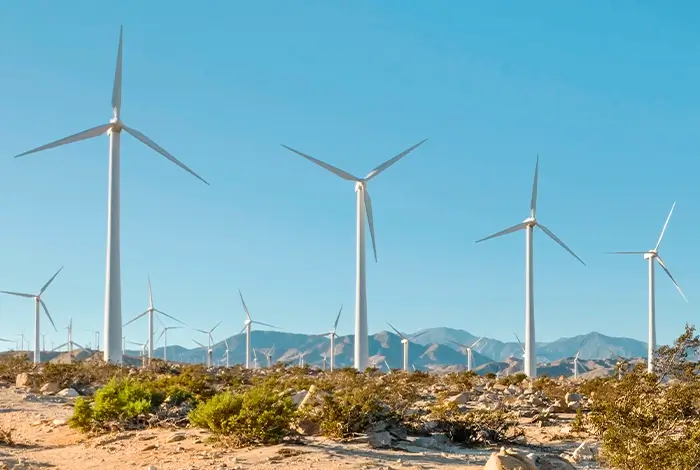
Bhairavi Aiyer then presented a case study on the Kipeto Wind Farm in Kenya, which has been operating on Maasai land since 2021. She provided an overview of the project’s development, highlighting the approaches taken to foster community participation and deliver long-term local benefits, including the establishment of a Community Development Trust which allocates 5% of the project’s gross profits to community development initiatives, Leasing agreements with built-in annual increases and revenue-sharing mechanisms, and biodiversity measures designed to minimise bird strikes and protect vultures migrating through the wind farm.
Bhairavi concluded by assessing the Kipeto Wind Farm using the Authority Dial Classification, demonstrating how the framework can be applied in practice to evaluate community decision-making authority across a renewable energy project.
Bukelwa Nzimande began by reflecting on the commitments made at COP28, where more than 130 countries pledged to triple global renewable energy capacity by 2030. As much of this expansion is expected to take place on land owned or stewarded by Indigenous Peoples and local communities, she emphasised the importance of placing communities at the centre of renewable energy planning and decision-making. Bukelwa introduced the newly launched report, Exploring Shared Prosperity, which examines practical approaches to benefit-sharing and community ownership in renewable energy projects. Drawing on interviews, case studies and insights from more than 40 Indigenous leaders, investors and renewable energy companies from around the world, the report explores the opportunities, challenges and risks of implementing more inclusive models. During her presentation, Bukelwa unpacked the report’s key findings and recommendations for developers, investors, policymakers and communities, highlighting practical actions that can help advance more equitable and locally beneficial renewable energy projects:
The webinar concluded with a panel discussion featuring Rachel Kisiangani, Caroline Avan and Juan Pablo Cardenas, who reflected on the practical realities of advancing community authority and ownership in large-scale renewable energy projects. The conversation explored where organisations can begin their community ownership journey, how different ownership models can be adapted to diverse operating contexts, and the critical role that trust, long-term partnerships and meaningful participation play in delivering a just energy transition.
A clear message emerged throughout the session: there is no single blueprint for community ownership. However, there is growing evidence that placing communities at the centre of decision-making leads to more equitable, resilient and sustainable renewable energy projects.
We are proud to share the Community Ownership in Renewable Energy Models: A Global Taxonomy. An industry brief exploring the practical and commercial case for community ownership models and a collection of case stories from across the Global South examining how these dynamics play out in practice will be published soon.
Together, these resources are designed to help ecosystem actors to better understand and strengthen community authority throughout the renewable energy project lifecycle.
These resources reflect the JustRE Alliance’s commitment to fostering collaboration, sharing practical knowledge and supporting more socially responsible renewable energy development across the Global South.