
Home » Assessing the Impact of Social Resistance on Renewable Energy Implementation in the Global South
JustRE Alliance, SEI

Assessing the Impact of Social Resistance on Renewable Energy Implementation in the Global South

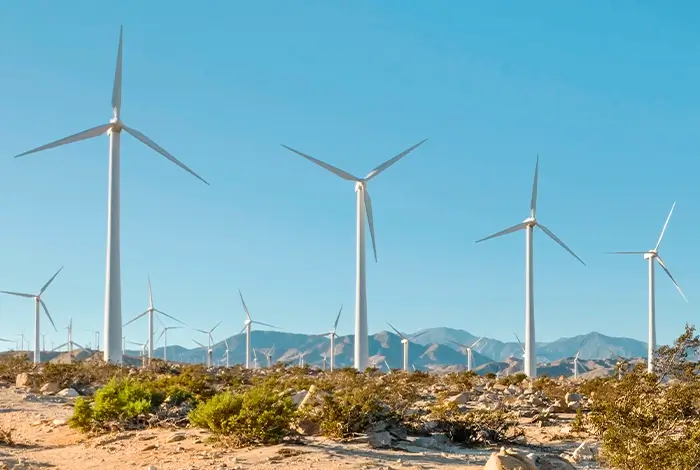
Multiple large white wind turbines in a rocky desert landscape under a blue sky, illustrating the research on how social resistance impacts the implementation of renewable energy in the Global South.

Background

The world needs to rapidly accelerate the deployment of renewable energy in order to meet global climate goals. However, across multiple regions of the Global South, renewable energy projects face delays, conflicts, and increasing levels of social resistance associated with territorial disputes, weak governance, socio-environmental impacts, and perceptions of injustice.

Against this backdrop, the JustRE Alliance hosted a webinar to present research led by the Stockholm Environment Institute (SEI) aimed at understanding how social resistance affects the pace and feasibility of implementing large-scale renewable energy projects.

The session brought together researchers, energy sector practitioners, representatives of international organizations, and participants from Latin America, Africa, and Asia to discuss a new data-driven approach that examines the relationship between social conflict, public perception, and delays in renewable energy projects.

The webinar was moderated by Juanita Fonseca, Coordinator of the JustRE Alliance, and featured a presentation by Germán Sáenz, Research Associate I at the Stockholm Environment Institute (SEI), who presented the main methodological findings and results of the research under the leadership of José Vega Araújo, Head of SEI’s Renewable Energy Team.

The webinar forms part of the broader work of the JustRE Alliance to promote socially sustainable energy transitions, recognizing that the pace of implementation depends not only on technical or financial factors, but also on territorial dynamics, community participation, and social legitimacy.

Key Questions Addressed

The discussion revolved around several key questions:

How does social resistance influence the implementation timelines of renewable energy projects?

What relationship exists between socio-environmental conflict and delays in clean energy projects?

Can public perception indicators anticipate future risks in the implementation of renewable energy projects?

How do historical and accumulated conflicts affect the acceptance of new projects?

What implications does this have for governments, investors, and project developers?

A recurring theme throughout the discussion was that social resistance should not necessarily be understood as opposition to the energy transition itself, but rather as a response to previous experiences of exclusion, territorial conflict, inequity, or a lack of meaningful participation—what has been described as accumulated socio-environmental impacts.

Scope of the Research

The research presented by SEI analyzed endogenous and exogenous factors affecting the implementation of wind and solar energy projects in nine countries across the Global South:

  • 3 countries in Latin America
  • 3 countries in Africa
  • 3 countries in Southeast Asia

The study reconstructed time series of projected renewable energy generation capacity (solar and wind) developed by public authorities or vertically integrated utilities and analyzed the difference between projected installed capacity and capacity that was actually implemented over time.

This difference was defined by the research team as the “implementation gap.”

The research sought to understand the extent to which social variables—particularly conflict and public perception—help explain these gaps, validating their role within a multivariable fixed-effects econometric regression model. Control variables included market, institutional, governance, and local factors. The full report will be published in the coming weeks.

Key Findings

Social conflicts generate significant financial impacts

One of the most important findings from the literature review was that renewable energy projects facing social conflict may experience estimated economic losses of between USD 25 million and USD 40 million per project. According to the research, these losses represent approximately 24% to 35% of a project’s net present value.

This finding reinforced the idea that social factors do not constitute merely a “reputational risk,” but rather have direct material implications for the financial viability of projects.

The review highlighted that traditional risk assessment models continue to underestimate the social dimension within energy planning processes.

Social resistance is associated with significant implementation delays

The study identified statistically significant relationships between the media sentiment indicator and the implementation gap.

When media coverage in a country shows high levels of predominantly enthusiastic reporting on renewable energy, wind and solar projects tend to fall behind planned implementation targets, with the implementation gap reflecting these effects three years later.

While this finding generated methodological discussion in contexts where freedom of expression and freedom of the press are limited, the research team explained that media coverage and public discourse may serve as early warning signals of future tensions related to energy projects.

The research suggests that media coverage and public narratives may reflect underlying territorial dynamics before conflicts formally escalate, and that the historical conflict memory indicator may capture the structural conflict conditions that exist in a country prior to project implementation.

This finding opened an important discussion about the need for financial institutions, governments, and developers to incorporate more sophisticated social monitoring tools into their decision-making processes.

Renewable energy projects inherit historical conflicts

One of the most relevant themes of the webinar was the concept of “latent conflicts.”

The research identified that many territories where renewable energy projects are currently being implemented already carry previous histories of conflict associated with:

  • Extractive projects
  • Existing energy infrastructure
  • Roads and transportation infrastructure
  • Land disputes
  • Political exclusion
  • Environmental degradation
  • Historical relationships of institutional mistrust

The discussion highlighted that renewable energy projects often do not arrive in “empty” territories, but rather in contexts where accumulated memories of conflict already exist.

As a result, community responses to new projects are often influenced not only by the current project itself, but also by previous experiences.

This generated an important reflection during the webinar: social resistance does not always reflect opposition to renewable energy itself, but rather opposition to historical forms of implementation that lacked participation or territorial justice.

Methodology Presented

The webinar included a detailed explanation of the methodology used to construct the social resistance indicators.

Data Sources

The research drew upon multiple international and public datasets, including:

One of the key methodological components was the use of Google’s GDELT media database since 2016.

The study also incorporated information from the Global Atlas of Environmental Justice (EJAtlas) to identify socio-environmental conflicts associated with energy and infrastructure projects.

Social Resistance Indicator

The research team developed a composite social resistance indicator based on two primary components:

  • A historical socio-environmental conflict memory indicator (weighted conflict memory) calculated using EJAtlas data
  • A media sentiment indicator calculated using GDELT data

The model combined both components to evaluate how social resistance relates to implementation delays and implementation gaps.

The research used multivariable regression models and fixed-effects approaches to analyze the statistical relationships between social variables and the control variables. In addition, each component of the indicator was tested separately within the fixed-effects multivariable regression model.

Discussion on the Use of Indicators

A significant portion of the discussion focused on the potential of these indicators as early warning tools.

Participants discussed how these types of tools could help:

  • Anticipate social risks
  • Identify territories with high levels of social sensitivity
  • Improve planning processes
  • Strengthen community participation strategies
  • Support differentiated responses depending on the type of conflict (temporary or structural)
  • Inform investment decisions

The potential for developing real-time monitoring tools with periodic updates was also discussed.

At the same time, the webinar addressed several important limitations in the construction of these indicators.

You may be interested in

Identified Limitations and Challenges

Participants and the research team highlighted several methodological and contextual limitations:

Limited Coverage

The number of countries included remains relatively small and does not capture the full diversity of the Global South.

Constraints in Media Environments

In countries with limited press freedom or where conflicts are underreported, media-based indicators may present limitations or biases by capturing primarily official narratives, without necessarily reflecting the existence of local social resistance.

Territorial Scale

National-level models do not always capture complex local dynamics or community-specific conflicts. The proposed indicator serves as an anticipatory signal that public authorities and decision-makers can monitor.

Need for Further Validation

The research team explained that it will be important to expand both the period of analysis and the number of countries included in order to strengthen the statistical validation of the results.

These discussions led to an important reflection:

The absence of visible conflict does not necessarily imply social acceptance, which may instead be captured through the historical socio-environmental conflict memory indicator.

Emerging Reflections from the Discussion

Several central ideas emerged throughout the webinar.

The Energy Transition Is Deeply Territorial

One of the most frequently repeated messages was that the energy transition is not solely a technological transformation.

It is also a social, political, and territorial process.

Renewable energy projects interact with historical dynamics of power, conflict, land access, governance, livelihoods, and benefit distribution.

Speed Without Legitimacy Can Generate More Delays

Participants discussed the tensions between accelerating renewable energy deployment and building social legitimacy.

Several comments emphasized that rushed implementation processes may ultimately generate greater delays, legal disputes, or social resistance.

This reinforced the idea that a rapid energy transition also requires robust participation processes and trust-building efforts.

The Social Dimension Remains Undervalued in Energy Planning

Another recurring theme was that traditional energy planning frameworks continue to prioritize technical and financial variables, while social factors are often addressed only reactively.

The research presented suggests that integrating social indicators from the earliest stages could significantly improve the viability and sustainability of renewable energy projects.

Next Steps Discussed

The research team shared several future areas of work:

  • Expanding the number of countries analyzed and extending the time horizon
  • Strengthening statistical validation through larger datasets
  • Developing subnational analyses
  • Creating real-time monitoring systems
  • Producing accessible tools for decision-makers

The discussion also highlighted the potential for publishing methodological guidance and visualization platforms to facilitate the use of these indicators by public institutions, developers, and investors.

General Conclusions

The webinar made clear that energy transitions cannot be assessed solely through installed capacity targets. Given current needs, the gap between planned and implemented capacity should be close to zero—or positive, in cases where implemented capacity exceeds planned capacity.

The effective implementation of renewable energy also depends on social, historical, and territorial factors that directly influence the legitimacy, pace, and sustainability of projects.

The research presented by SEI provides emerging evidence of how social conflict and public perception dynamics may serve as anticipatory indicators for tracking the implementation trajectory of renewable energy infrastructure in the Global South.

The discussion also highlighted the need to advance energy transition models that incorporate:

Meaningful participation

Attention to territorial memories

More inclusive governance mechanisms

More sophisticated tools for understanding social dynamics

The webinar reaffirmed a central idea for the JustRE Alliance:

A rapid energy transition will only be possible if it is also socially legitimate and territorially just.
Upcoming Webinar: June 18th
Who Decides? Community Authority and Large-Scale Renewable Energy in the Global South
Join us for this session hosted by the Responsible Energy Initiative (REI) at Forum for the Future and the JustRE Alliance. The webinar will launch new research and resources, including a taxonomy on community authority and case studies of successful community ownership and participation models across the Global South.

Learn more and register here

Tags: Econometric regression model, Energy planning, Implementation gap, Latent conflicts, Media sentiment indicator, Renewable Energy Implementation, , Socio-environmental conflict
Join to our Newsletter